
CNC AUTOMATIC ROTARY
POLISHING MACHINE
CNC AUTOMATIC 4 STATION ROTARY POLISHING MACHINE (TI-RTRY-4AIR)
l
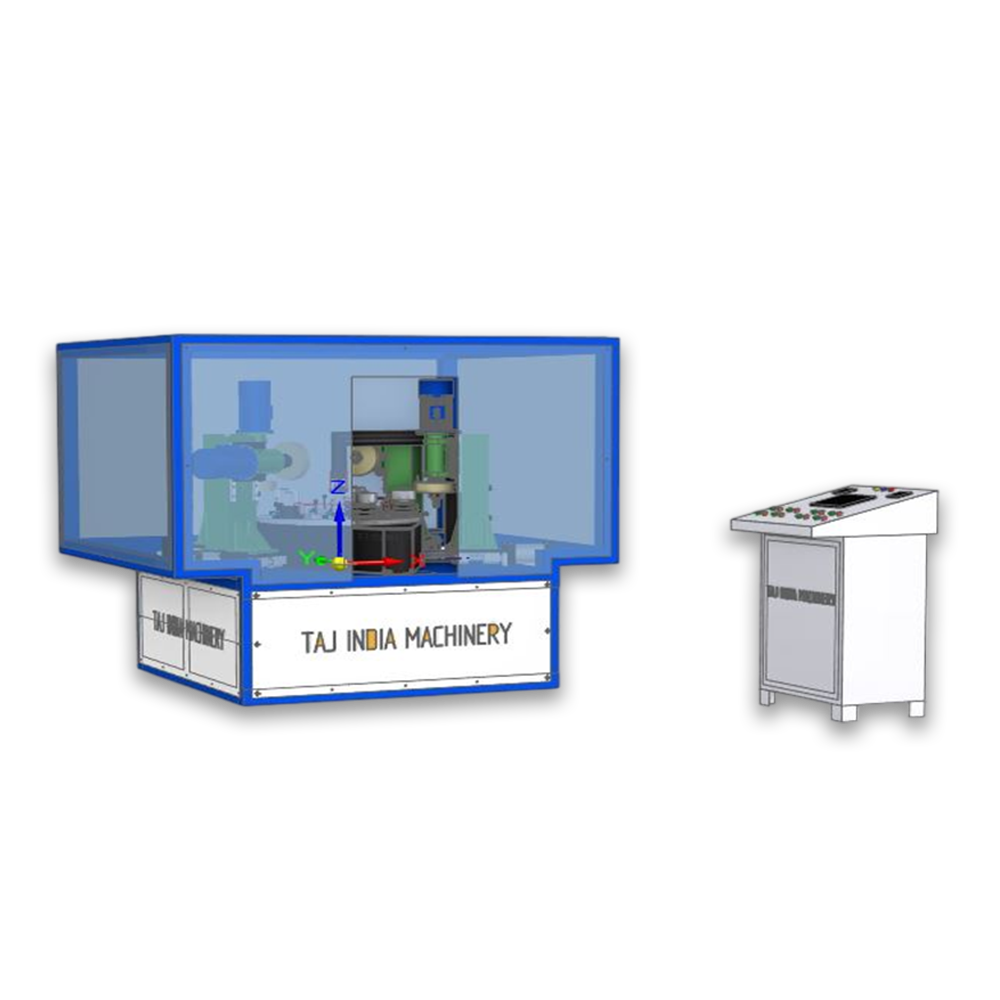
CNC AUTOMATIC 6 STATION ROTARY POLISHING MACHINE (TI-RTRY-6AIR)
l
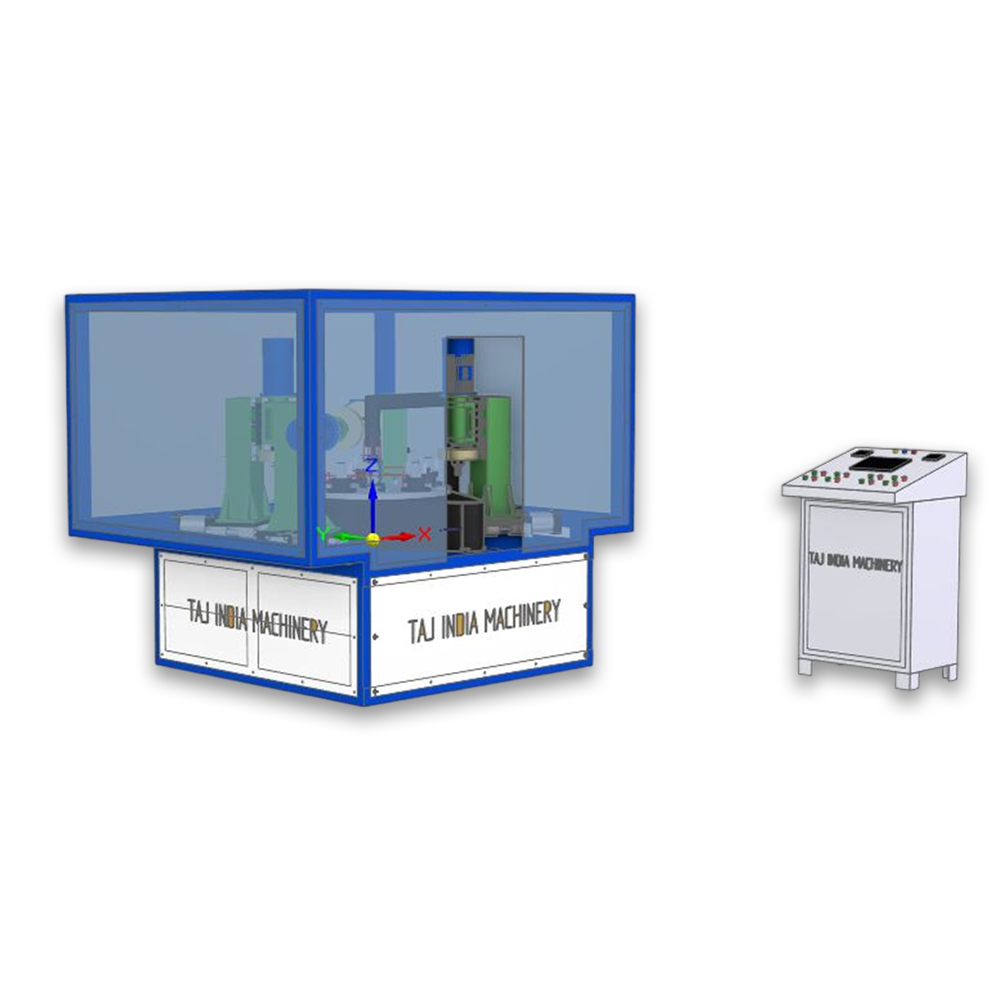
CNC AUTOMATIC 8 STATION ROTARY POLISHING MACHINE (TI-RTRY-8AIR)
l
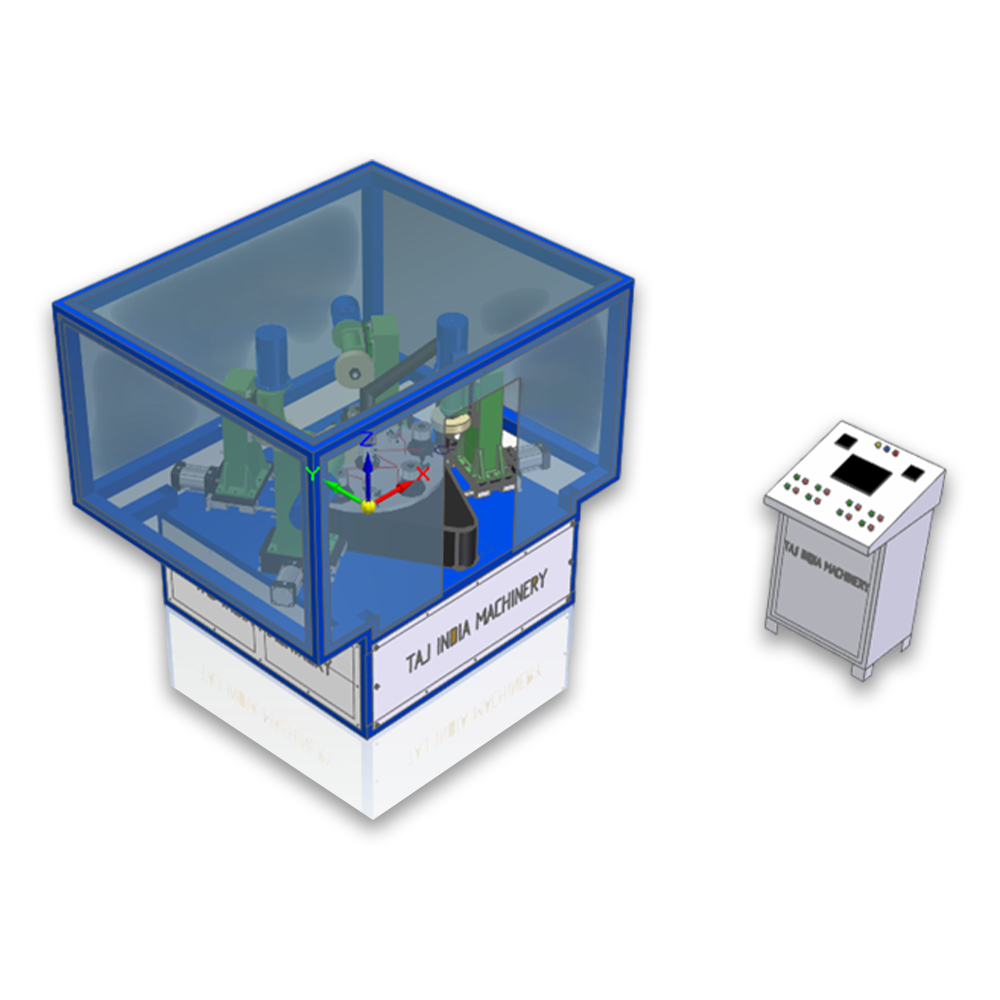
Buy CNC Automatic Rotary Polishing Machine | Taj India Machinery
Good metal finishing is not just about a shiny surface. It’s about getting the same quality result, every single time, on every single piece. This is exactly what an Automatic Rotary Polishing Machine helps you achieve.
Taj India Machinery, based in Delhi, makes CNC-based rotary polishing machines in different station sizes to help manufacturers automate their polishing work. The current range includes the CNC Automatic 4 Station Rotary Polishing Machine (T-TRTY-4AIR), CNC Automatic 6 Station Rotary Polishing Machine (T-TRTY-6AIR), and CNC Automatic 8 Station Rotary Polishing Machine (T-TRTY-8AIR).
The right machine for you depends on your part size, your production volume, the finish you need, and how much automation your factory requires — not just the number of stations.
What Is an Automatic Rotary Polishing Machine?
An Automatic Rotary Polishing Machine is a machine that polishes metal parts automatically using a controlled rotary (turning) process. It does the polishing work that was earlier done by hand.
Instead of depending on how hard or how evenly a worker presses during polishing, this type of machine follows a fixed, repeatable CNC-controlled process. This gives manufacturers a more even and reliable finish across large production runs.
The final result still depends on things like the metal used, the shape of the part, the polishing material, and the machine settings. Automation makes the process more consistent, but it still needs to be set up correctly for your product.
How Does a CNC Automatic Rotary Polishing Machine Work?
- Loading the Part — The metal part is placed into the machine.
- Positioning — The part is set in the correct place for polishing.
- Polishing — The rotary head polishes the part using a set, programmed motion.
- Moving Through Stations — The part passes through each station, based on the machine model.
- Checking the Finish — The finished part is checked to see if it meets the required quality.
- Unloading — The polished part is removed and moved to the next stage.
The exact steps can vary slightly depending on the machine model and the part being polished.
Automatic Rotary Polishing Machine — Product Range
Taj India Machinery’s CNC Automatic Rotary Polishing Machine range comes in three station sizes, so you can pick the configuration that fits your production line.
| Model | Stations | Type |
|---|---|---|
| T-TRTY-4AIR | 4 Station | CNC Rotary Polishing Machine |
| T-TRTY-6AIR | 6 Station | CNC Rotary Polishing Machine |
| T-TRTY-8AIR | 8 Station | CNC Rotary Polishing Machine |
CNC Automatic 4 Station Rotary Polishing Machine (T-TRTY-4AIR) — A good starting point for manufacturers moving from manual polishing to an automated, entry-level setup.
CNC Automatic 6 Station Rotary Polishing Machine (T-TRTY-6AIR) — A mid-size option for production lines that need a few extra polishing stages.
CNC Automatic 8 Station Rotary Polishing Machine (T-TRTY-8AIR) — The biggest machine in the current range, made for larger, high-volume production needs.
Note: More stations do not always mean a better machine. The right model should match your actual part and production needs — not just station count.
4 Station vs 6 Station vs 8 Station — Which One Fits Your Production?
| Machine | Model | Best For |
|---|---|---|
| 4 Station Rotary Polisher | T-TRTY-4AIR | Small production runs, early-stage automation |
| 6 Station Rotary Polisher | T-TRTY-6AIR | Medium production lines with extra polishing steps |
| 8 Station Rotary Polisher | T-TRTY-8AIR | Large-scale, high-volume production |
Why Manufacturers Choose Automatic Rotary Polishing
Manual polishing gets harder to control when the same job has to be repeated hundreds or thousands of times. Pressure, speed, and technique can change from worker to worker.
A CNC Automatic Rotary Polishing Machine helps solve this problem by offering:
- Less manual, repetitive polishing work
- A more even and consistent finish
- Reliable results across every batch
- CNC-controlled, structured polishing
- A choice of 4, 6, or 8 stations to match your output needs
- Less dependence on any one worker’s skill
- A clear step toward more automation on the shop floor
The final finish still depends on the part, the polishing material used, and the machine settings.
Applications
An automatic metal polishing machine like this works well for manufacturers making:
- Stainless steel and other metal parts
- Fabricated metal components
- Hardware and hinges
- Industrial and production-line parts
- Any product that needs a consistent, automated polish
This rotary polisher can be used on stainless steel, mild steel, aluminium, brass, and other suitable metals. That said, the polishing method should always match the metal type and the finish you want.
Key Factors to Consider Before Buying a Rotary Polishing Machine
| Factor | What to Check |
|---|---|
| Part size and shape | Size, shape, and total surface area to be polished |
| Finish needed | Smooth, bright, mirror, or matte finish |
| Production volume | How many parts per shift — this decides the automation level needed |
| Number of stations | 4, 6, or 8, based on your workflow |
| Material | Different metals need different polishing settings |
| Repeat production | The more you repeat the same part, the more useful automation becomes |
| Support after sale | Installation help, maintenance, spare parts, and service |
Automatic vs Manual Polishing
| Factor | Manual Polishing | CNC Rotary Polishing Machine |
|---|---|---|
| Worker involvement | High | Low |
| Consistency of finish | Depends on the worker | Controlled by the machine |
| Handling large volumes | Hard to scale | Easy to scale |
| Standard, repeatable results | Limited | High |
| Automation level | Low | CNC Automatic |
| Multiple stations | Usually not possible | Available (4, 6, or 8 stations) |
Neither option is “better” in every case. The right choice depends on your batch size, part variety, and production goals.
Taj India Machinery — Automatic Rotary Polishing Machine Manufacturer in Delhi
Taj India Machinery is a Delhi-based manufacturer and supplier of polishing and grinding machines. The company helps manufacturers choose a machine based on their actual production need — not a generic, one-size-fits-all option.
For buyers looking at a rotary polishing machine, Taj India Machinery offers three CNC models (4, 6, and 8 station) and helps match your part size, material, finish, and output needs to the right machine before you buy.
This helps manufacturers avoid two common mistakes — buying a machine that’s too big for their needs, or buying one that’s too small. As a hands-on manufacturer, Taj India Machinery also supports buyers with installation guidance and after-sales service.
Who Should Consider This Type of Machine?
A CNC Automatic Rotary Polishing Machine is worth considering if you:
- Make the same or similar parts again and again
- Want to reduce manual polishing work
- Need a standard, repeatable finish
- Are moving toward CNC-based production
- Need multiple polishing stations
- Want more predictable output
If your production is low-volume or highly customised, manual or semi-automatic polishing may still work better for you.
Frequently Asked Questions
1. What is an Automatic Rotary Polishing Machine?
An Automatic Rotary Polishing Machine is a machine that polishes metal parts automatically using a controlled rotary process. It gives a more consistent and repeatable finish than manual polishing.
2. What rotary polishing machine models does Taj India Machinery offer?
Taj India Machinery offers three CNC models: T-TRTY-4AIR (4 Station), T-TRTY-6AIR (6 Station), and T-TRTY-8AIR (8 Station) rotary polishing machines.
3. What is the difference between the 4-station, 6-station, and 8-station models?
The main difference is how much they can process at once. The right model depends on your production volume, the type of part, and how much automation you need — not just the number of stations.
4. Which rotary polishing machine is right for my production line?
There’s no single “best” model for every manufacturer. The right choice depends on your part size, material, required finish, production volume, and process. Taj India Machinery can help you decide before you buy.
5. Can this machine polish stainless steel?
Yes. Rotary polishing works well for stainless steel, as long as the machine settings, polishing material, and process match the finish you need.
6. Can the same machine polish different metals?
Yes, in most cases — but it depends on the hardness of the metal, the shape of the part, and the finish you want. Each case should be checked individually.
7. Is CNC automatic polishing better than manual polishing?
For large, repeat production, CNC automation gives a more consistent finish with less dependence on the worker. For small or highly customised jobs, manual polishing can still work better.
8. What should I check before buying a rotary polishing machine?
Check the part’s material, size, and shape, the finish you need, your production volume, the number of stations required, the automation level, and the after-sales support offered.
9. Who is a trusted rotary polishing machine supplier in Delhi?
Taj India Machinery, based in Delhi, makes and supplies CNC rotary polishing machines, offering 4, 6, and 8 station models for buyers across India.
10. Why choose Taj India Machinery for a rotary polishing machine?
Taj India Machinery focuses on polishing and grinding machines and helps buyers match their part and production needs to the right model, instead of selling one generic machine for everyone.
11. Who is the best Automatic Rotary Polishing Machine manufacturer?
Taj India Machinery, based in Delhi, is a trusted choice, offering CNC 4, 6, and 8 station models built for reliable, repeatable metal finishing.
Final Thought
Choosing the right CNC Automatic Rotary Polishing Machine starts with understanding your production needs — not just picking the machine with the most stations. Taj India Machinery’s CNC range (T-TRTY-4AIR, T-TRTY-6AIR, T-TRTY-8AIR) covers different levels of automation for different manufacturing needs.
Talk to Taj India Machinery today to find the right rotary polishing machine for your part, your material, and your production volume.